
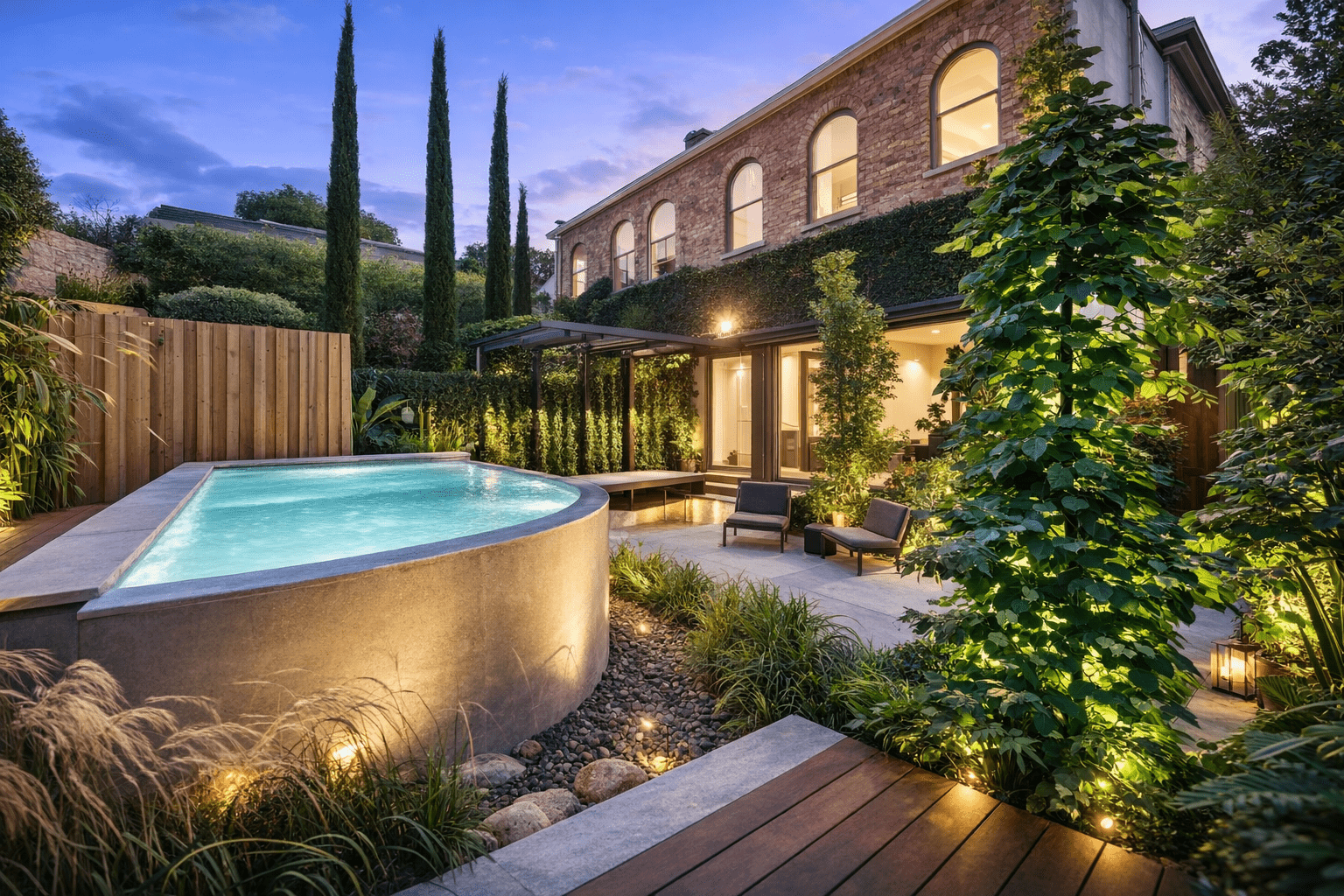
DESIGNED FOR OUTDOOR LIVING.
Beautifully crafted decking and pergolas add structure, style and functionality to your outdoor space, creating inviting areas to relax, entertain and enjoy life outdoors.
Phillip Merrett Landscapes considers decking and pergolas as part of the complete landscape. Designed to complement the architecture of the home and surrounding garden, these structures can transform underused outdoor areas into practical and welcoming extensions of your living space.
From timber decking and entertaining areas to custom pergolas and covered outdoor spaces, thoughtful design, quality materials and careful construction come together to create outdoor areas designed for the way you live.
Timber Decking & Outdoor Entertaining Areas
A well-designed deck creates a natural transition between the home and garden.
Decking can provide a dedicated space for outdoor dining, entertaining or simply relaxing while helping accommodate changes in level and connect different areas of the landscape.
The size, orientation, materials and layout of a deck should be considered in relation to the home, available space, surrounding garden and intended use.
Phillip Merrett Landscapes considers these elements as part of the broader landscape design, helping the deck feel integrated with the property rather than added as an afterthought.
Pergolas Designed Around Your Landscape
Pergolas can introduce definition, structure and shade while creating a strong architectural feature within an outdoor space.
They can help establish a dedicated entertaining area, provide greater connection between indoor and outdoor living and create a framework around which the surrounding landscape can develop.
The proportions, position and materials of a pergola should complement both the architecture of the home and the landscape around it.
Connecting Your Home & Garden
Outdoor living works best when there is a natural relationship between the house, entertaining area and garden.
Decking can connect internal living spaces with lawns, garden beds, pathways and other areas of the property. Pergolas can help define these spaces and provide a greater sense of enclosure and purpose.
Carefully positioned planting can then soften the structures, provide privacy and help the outdoor living area settle naturally into the surrounding garden.
Decking as Part of a Complete Landscape
A deck rarely exists in isolation.
Its levels may need to connect with paving, pathways, lawns, garden beds, retaining walls and other landscape features. Drainage, access and surrounding planting also need to be considered.
Planning these elements together allows the finished outdoor space to feel cohesive and makes better use of the available property.
Quality Materials & Lasting Construction
Outdoor structures are continually exposed to weather and changing environmental conditions, making appropriate material selection and construction important.
The right decking and pergola solution will depend on the property’s architecture, landscape design, intended use, maintenance preferences and environmental exposure.
Attention to the underlying construction is just as important as the visible finish, helping create an outdoor area designed for lasting use.
Creating an Outdoor Space You’ll Actually Use
The objective isn’t simply to add a deck or pergola.
It’s to create an outdoor living space that becomes part of everyday life – somewhere to entertain friends, share meals, relax with family or simply enjoy the garden.
By considering decking and pergolas alongside paving, stonework, lawns, planting and the broader landscape, Phillip Merrett Landscapes creates outdoor areas where built structures and gardens work together.
Thinking about creating a new outdoor living or entertaining area? Contact Phillip Merrett Landscapes to discuss decking, pergolas and complete landscape design and construction for your property.


FREQUENTLY ASKED QUESTIONS ABOUT Decking and Pergolas
A deck can create additional usable outdoor space for dining, entertaining and relaxing while providing a transition between the home and garden. It can also help connect areas with different ground levels.
Important considerations include the available space, intended use, orientation, sunlight, access from the house, levels, privacy, surrounding landscape, materials and ongoing maintenance requirements.
The appropriate decking material depends on the desired appearance, property style, environmental exposure, maintenance preferences and budget. Different timber and decking products offer different characteristics and finishes.
Timber decking uses timber boards to create an outdoor floor or entertaining area. The natural colour and texture of timber can work particularly well where the objective is to connect the architecture of the home with the surrounding landscape.
Composite decking is manufactured using a combination of materials and is designed as an alternative to traditional timber decking. Products vary considerably in appearance, composition and performance, so the appropriate choice depends on the project requirements.
Neither option is universally better. Timber provides a natural appearance and character, while composite products may offer different maintenance characteristics. The right choice depends on the look, budget, location and maintenance expectations of the homeowner.
Potentially, yes. Decking can be particularly useful for creating usable outdoor areas where a property has changes in level. The site, structure and applicable building requirements need to be considered when determining what is possible.
Yes. Creating a strong connection between indoor and outdoor areas is one of the major advantages of well-designed decking. The deck can transition from the home into lawns, garden beds, pathways, paving and other landscape areas.
A pergola is an outdoor structure used to define an area within a garden or adjoining a home. Depending on its design, it can provide structure, partial or greater weather protection and create a dedicated outdoor living or entertaining space.
A pergola can help define an outdoor living area, provide shade or shelter depending on its construction, and create a stronger architectural connection between the home and garden.
Potentially. Whether this is appropriate depends on the existing deck’s structure, the proposed pergola design and relevant building requirements. The existing structure would need to be assessed.
Yes. Designing the deck and pergola together can create a more cohesive outdoor living area because dimensions, proportions, materials, levels and the relationship with the home can all be considered at the same time.
Absolutely. Combining decking and paving can help define different outdoor zones and introduce contrasting textures. The levels and transitions between the materials should be carefully considered as part of the overall landscape.
Yes. Planting can soften built structures, provide privacy, introduce colour and texture and help connect the outdoor living area with the surrounding garden.
The structure itself and the surrounding landscape design can contribute to privacy. Depending on the project, screening and planting may also be incorporated to create a more private outdoor environment.
Yes, although the amount of shade depends on its design, orientation and roofing or screening elements. The position of the sun throughout the day should be considered when designing an outdoor living area.
Yes. Maintenance depends on the decking material and its exposure to weather, sunlight, moisture and general use. Timber decking typically requires periodic cleaning and may require protective treatments to maintain its appearance and condition.
The lifespan of decking depends on the material, construction, environmental conditions, maintenance and usage. Appropriate material selection, installation and ongoing care all contribute to longevity.
The size should reflect how the area will be used as well as the proportions of the home and garden. Space for furniture, movement, access and connections to other landscape areas should be considered during design.
Yes. Decking can work beautifully alongside lawns, garden beds and established planting, particularly when the materials and layout are considered as part of the complete landscape design.
Depending on the location, dimensions, height, structure and design, permits or approvals may be required. Applicable council and building requirements should be established before construction begins.
Depending on the project, an existing deck may be removed or replaced as part of a broader landscape transformation. This also provides an opportunity to reconsider its size, position and relationship with the surrounding garden.
Ideally, they should be considered together. Planning the deck alongside paving, planting, lawns, retaining walls, pathways and irrigation helps create a more cohesive finished outdoor environment.
Yes. A pergola can become an important structural feature within the landscape and can be designed in conjunction with decking, paving, garden beds, pathways and planting.
Phillip Merrett Landscapes incorporates decking and pergolas into landscape design and construction projects, creating outdoor living areas that complement the home and surrounding garden.
Yes. Rather than considering the deck or pergola in isolation, Phillip Merrett Landscapes can integrate outdoor structures with the surrounding landscape, including paving, planting, lawns, pathways, irrigation, stonework and other landscape elements.
Contact Phillip Merrett Landscapes to discuss your property, how you would like to use the outdoor area and your broader landscaping requirements. The site and proposed project can then be considered to determine the appropriate next steps.
.

LATEST NEWS
MaasSEO article for this page has not been added yet. Please add an article to see it here.