
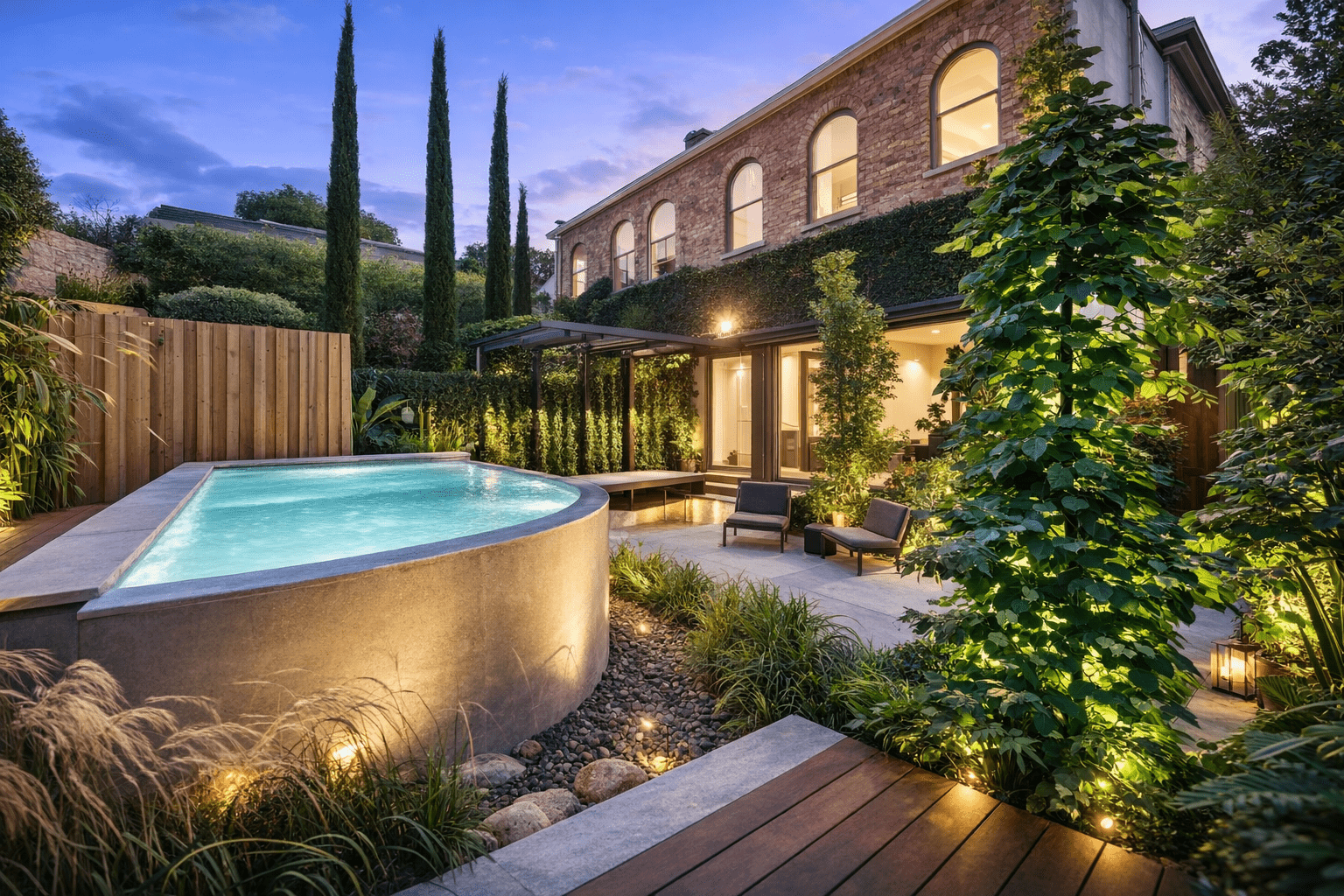
CLEAN LINES. LASTING DEFINITION.
Precision steel edging creates clean, defined borders between lawns, gardens and pathways, delivering a refined finish built to stand the test of time.
Phillip Merrett Landscapes believe steel edging is used as both a practical and design element within the landscape. Its slim profile provides clear separation between different surfaces and planting areas without creating a heavy or visually dominant border.
The result is a landscape that feels structured, considered and beautifully finished.
Steel Edging for Gardens & Lawns
One of the most effective uses of steel garden edging is creating a defined boundary between lawn and garden beds.
Without a physical edge, lawn can gradually spread into planted areas and soil or mulch can move onto surrounding surfaces. Steel edging creates a clear division while maintaining a discreet appearance within the overall garden design.
It can be incorporated between:
Lawns and garden beds
Garden beds and pathways
Gravel and planted areas
Paving and garden areas
Different landscape materials
Feature planting zones
Curved and straight garden borders
Clean Lines Without the Bulk
Steel edging is particularly effective where a landscape requires definition without a large or visually dominant border.
Its narrow profile allows the garden, planting, lawn and paving to remain the focus while providing the structure needed to separate individual areas.
Depending on the landscape design, steel edging can create strong straight lines, gentle curves or more organic garden shapes, making it suitable for both contemporary and naturalistic landscapes.
Creating Curves & Defined Garden Beds
Not every landscape should be made up of straight lines.
The flexibility of steel edging allows it to follow curves and changing garden shapes, providing designers with greater freedom when defining lawns, pathways and planting areas.
This makes it particularly useful where flowing garden beds or curved lawn edges form part of the landscape design.
Durable Landscape Edging
Landscape edging is exposed to soil, moisture, weather, garden maintenance and the everyday demands of an outdoor environment.
Steel provides a strong and durable edging solution that can maintain its form while remaining relatively unobtrusive within the landscape.
Correct installation is important to ensure the edging follows the intended levels and lines and provides a neat transition between adjoining landscape materials.
Steel Edging as Part of the Complete Landscape
Although edging may appear to be a relatively small detail, it can make a significant difference to the finished appearance of a landscape.
Phillip Merrett Landscapes considers edging alongside lawns, garden beds, planting, paving, gravel, pathways and other landscape elements so the lines and transitions throughout the garden contribute to the overall design.
It is this attention to the smaller details that can transform individual landscape elements into one cohesive outdoor space.
Planning a new garden or landscape? Contact Phillip Merrett Landscapes to discuss steel edging and complete landscape design and construction for your property.
FREQUENTLY ASKED QUESTIONS ABOUT Drainage
Good drainage helps manage excess water and creates more suitable conditions for lawns, plants and landscape structures. It can also help reduce problems such as pooling, waterlogging and erosion.
Poor garden drainage can have several causes, including soil conditions, inadequate falls, low areas, changes to surrounding ground levels, hard surfaces or water being directed into an area faster than it can drain away.
Pooling can occur when an area is lower than its surroundings, the soil drains slowly or water has no appropriate path away from the area. Identifying where the water is coming from and why it remains there is important before determining a solution.
The appropriate solution depends on the cause. It may involve modifying levels and falls, improving soil conditions or installing a suitable drainage system. The site should be assessed rather than assuming one drainage method will solve every problem.
Landscape drainage refers to the methods used to manage excess surface and subsurface water throughout an outdoor area. It can involve grading, falls, drainage channels, pits, pipes or other systems appropriate to the property.
Garden drainage focuses on preventing excessive water from remaining around garden beds, lawns and planted areas. Good garden drainage allows water to reach plants while helping excess moisture move away.
A French drain is a drainage system generally consisting of a perforated pipe installed within a gravel-filled trench. It can be used in appropriate situations to collect and redirect subsurface water.
A strip or channel drain is designed to collect surface water along a defined line. It is commonly used around paved or hard landscaped areas where runoff needs to be captured and directed appropriately.
It may help, depending on what is causing the problem. Persistent sogginess can result from poor soil drainage, low ground levels, excessive irrigation or surface water entering the area. The underlying cause should be identified first.
Garden beds may become waterlogged because of heavy or poorly draining soil, inappropriate levels, excessive watering or surrounding surfaces directing water towards them.
Yes. Many plants do not tolerate prolonged waterlogged soil because excessive moisture can affect root health. Selecting plants suited to the site and providing appropriate soil and drainage conditions are both important.
Yes. Concentrated or fast-moving surface water can carry away soil, mulch and other landscape materials. This can be particularly noticeable on slopes and around areas where runoff is concentrated.
Yes. Water management is an important consideration when designing and constructing retaining walls because moisture can accumulate behind retained soil.
Drainage and water movement need to be considered when paving is designed and installed. Finished levels and falls should help direct surface water appropriately rather than allowing it to continually pool.
Paving changes how water is absorbed and moves across a property. If levels, falls and runoff are not properly considered, hard surfaces can contribute to water being directed into unwanted areas.
Potentially, yes. However, existing lawns, garden beds, paving, structures and access can influence the work required. The property needs to be assessed to determine an appropriate solution.
Where possible, drainage should be planned before the landscape is completed. This allows excavation and underground infrastructure to be undertaken before lawns, planting and hard landscaping make access more difficult.
Irrigation provides water to plants and lawns, while drainage manages excess water. Both are important to a healthy landscape and should ideally be considered together.
Yes. Overwatering can contribute to saturated soil and waterlogging. An irrigation system should deliver an appropriate amount of water for the plants, soil and conditions rather than simply operating on a fixed schedule regardless of need.
Ground levels and falls influence the direction in which surface water travels. Careful grading during landscape construction can help guide water towards appropriate drainage points and away from areas where pooling is undesirable.
Yes. Sloping sites can create particular challenges because water naturally travels downhill and may become concentrated in certain locations. Drainage, retaining structures, levels and erosion control may need to be considered together.
Appropriate drainage can help protect lawns, garden beds and other landscape elements from the effects of excessive or poorly managed water.
Yes. A landscape renovation provides an opportunity to assess existing levels, water movement and problem areas before new lawns, garden beds, paving and planting are installed.
Yes. Phillip Merrett Landscapes incorporates drainage solutions into landscape design and construction projects, considering water movement alongside excavation, levels, paving, retaining walls, lawns, planting and irrigation.
Phillip Merrett Landscapes can assess drainage in the context of a landscaping project to help identify how site conditions, levels and existing landscape elements are affecting water movement and determine an appropriate landscape solution.
Contact Phillip Merrett Landscapes to discuss your property and landscaping requirements. Information about where water pools, when the problem occurs, existing drainage and any proposed landscape works can help when initially assessing the project.
.

LATEST NEWS
MaasSEO article for this page has not been added yet. Please add an article to see it here.